Skip to content
Don't have an account?
Sign in and start earning amazing awards!
Jan Kiliński’s Monument

Jan Kiliński’s Monument

[pl] Aleja Niepodległości 208
Aleje Jerozolimskie 37
Aleje Ujazdowskie
Stone of Operation Arsenal (Akcja pod Arsenałem)
Memorial Stone of the Battalion “Czata”
Memorial Stone of the Battalion “Gozdawa”
Memorial Stone of the Battalion “Miłosz”
Memorial Stone of the Battalion “Miotła” (Broom)
Memorial Stone of General Anders’s Battalion “Wigry”
Memorial Stone of the Battalion “Zaremba-Piorun”
Memorial Stone of the Battalion “Zośka”
Memorial Stone of the Brotherhood of the Arms
Memorial Stone of General Maczek
Combat group ‘Krybar’ Memorial Stone
Jerzy Gawin’s memorial stone
Memorial Stone of Katyń
Memorial Stone of the 3rd May Constitution
[pl] Kamień Pamięci Monte Cassino
Memorial Stone of the Defenders of the Power Station
Memorial Stone of Victims of Stalinism
Memorial Stone of the November Uprising
Memorial Stone of the Council for Helping Jews
 Memorial Stone of Fights for the Vistula River and its Abutments
Memorial Stone of the ‘’Ruczaj” Group
Memorial Stone and tribute to Slovaks
Stone of the Group “Bartkiewicz”
Old-Town fortifications
Memorial Place of the Fallen Soldiers of the General Jozef Bem Suligowski’s troops
Place of the Polish fight for the freedom of their homeland
Ogród Saski
Park Agrykola
Commemorative tablet to the Poles and the Warsaw inhabitants killed in the Second World War
Mordechaj Anielewicz Monument- Mound
Monument to the Battle of Monte Cassino
Monument to the Ghetto Heroes
Monument to the Heroes of Warsaw “Nike”
Monument to the Polish Underground Weapon
Jan Kiliński’s Monument
Józef Piłsudski’s Monument
Priest Józef Stanek’s Statue
Monument in Memory of the Fallen Polish Pilots in the Second World War
The Little Insurrectionist’s Monument
Monument to the Teachers of Secret Teaching
Statue of the Victims of The Tank Trap
Monument to the Victims of Simons’ Passage
Partisan’s Monument
Monument to the Fallen and Murdered in the East
Statue of the Czerniaków Rebelians and Soldiers of the First Polish Army
Monument of Warsaw Insurgents
Roman Dmowski’s Monument
Stefan Rowecki’s “GROT” Monument
Tadeusz Kościuszko’s Monument
Monument of the Soldier of the First Army of the Polish Army
Rynek Solecki
Commemorative tablet of the victorious return of troops from the war of 1920
Factory of the Explosives ‘Kinga’ Memory Board
Commemorative board to the action at Wende’s Pharmacy
Andersa Street
ul. Dobra 96
ul. Emilii Plater 15
ul. Kościelna
[pl] ul. Marszałkowska 136
ul. Nowy Zjazd 1
ul. Piękna 17
ul. Przechodnia
ul. Solec 41
ul. Solidarności 83
ul. Solidarności 85

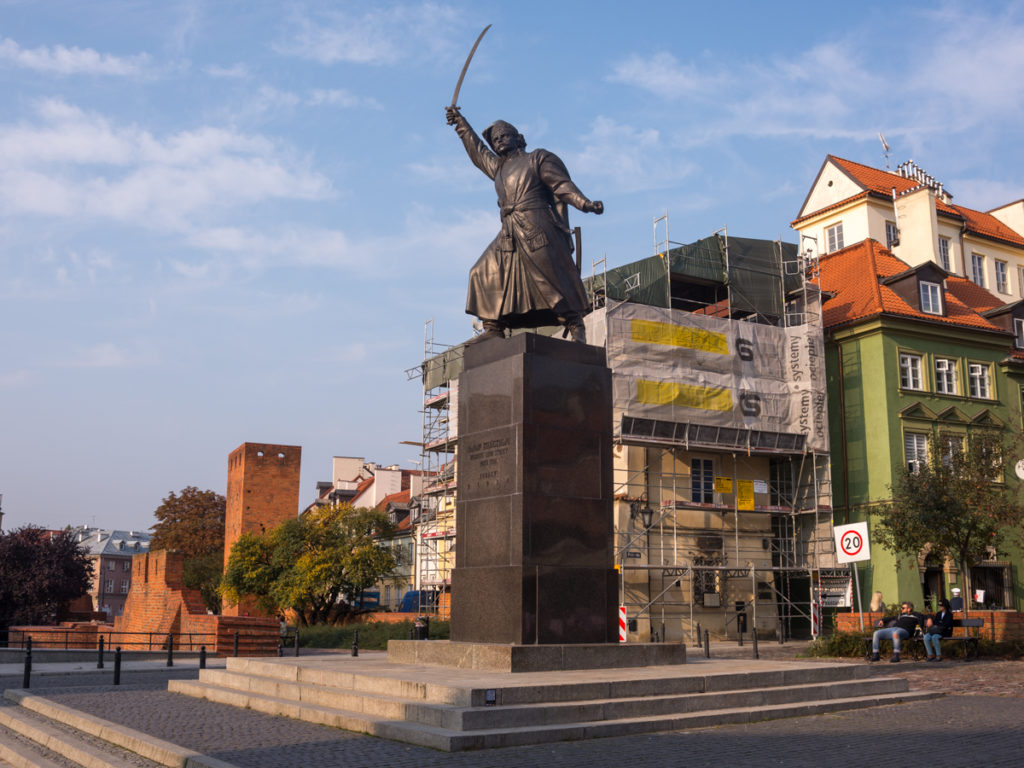
Jan Kiliński’s Monument (Podwale Street)

Jan Kiliński was born in 1760 in Trzemeszno in Wielkopolska. Twenty years later, he moved to Warsaw and became a shoemaker. He quickly gained a wide clientele and made his fortune. In 1792 he became a councillor of Warsaw. When in March, 1794 the Kościuszko insurrection broke out, secret preparations for the uprising against tsarist Russia began in Warsaw. Also the leader of the guild of shoemakers Jan Kiliński joined the conspiracy. The news about the insurgents’ victory at the Battle of Racławice and the conspirations’ information about the pacification of the capital planned by the Russians on April 19th, were the motive of the outbreak of fighting in the streets of the city on April 17th. Jan Kiliński was one of the commanders of the people, contributing to the liberation of the capital from the Russian possession. On the second day of fighting, Kiliński led the Warsaw people to conquer the palace where the Russian embassy was placed. Polish prisoners were released from the cellars. On April 19th, the insurrection joined the Kościuszko uprising and Tadeusz Kościuszko was titled the Supreme Commander of the Armed Forces.

Jan Kiliński is a symbol of Polish patriotic middle class. The thought of his adoration was born after regaining independence. The unveiling of the monument on April 19th 1936 had a supreme character. It was attended by the President Ignacy Mościcki. At the end of the ceremony, there was the march of representatives of the Warsaw guilds in the streets of the capital city. Originally unveiled in 1936 at the Krasiński Square, several times changed its location, to finally stand at Podwale Street. The history of the monument during the German occupation is interesting. In February 1942, the German occupiers in revenge for the so- called action of small sabotage, removed the monumental sculpture from the pedestal and hid in the basement of the National Museum. The small sabotage action was intended to removing of the German plaque from the Nicolaus Copernicus’s statue. Almost immediately, thanks to the underground activity, the inscription appeared on the wall of the National Museum. It was written: “People of Warsaw, I am here! Jan Kiliński”. The repressive actions of the occupying force, saved the monument involuntarily. It survived the war and returned to its place. Then, in 1959, thanks to the efforts of the Warsaw Chamber of Craft (Warszawska Izba Rzemieślnicza), it was transferred to Podwale Street, closer to the place where the brave shoemaker lived, worked and fought.